Home Book A Call
High conversion website

A website that
books work.

Most contractor sites are a brochure with a phone number at the bottom. Yours is built to do one job: turn the person reading it into a conversation, before they go back to the search results and call the next name down.

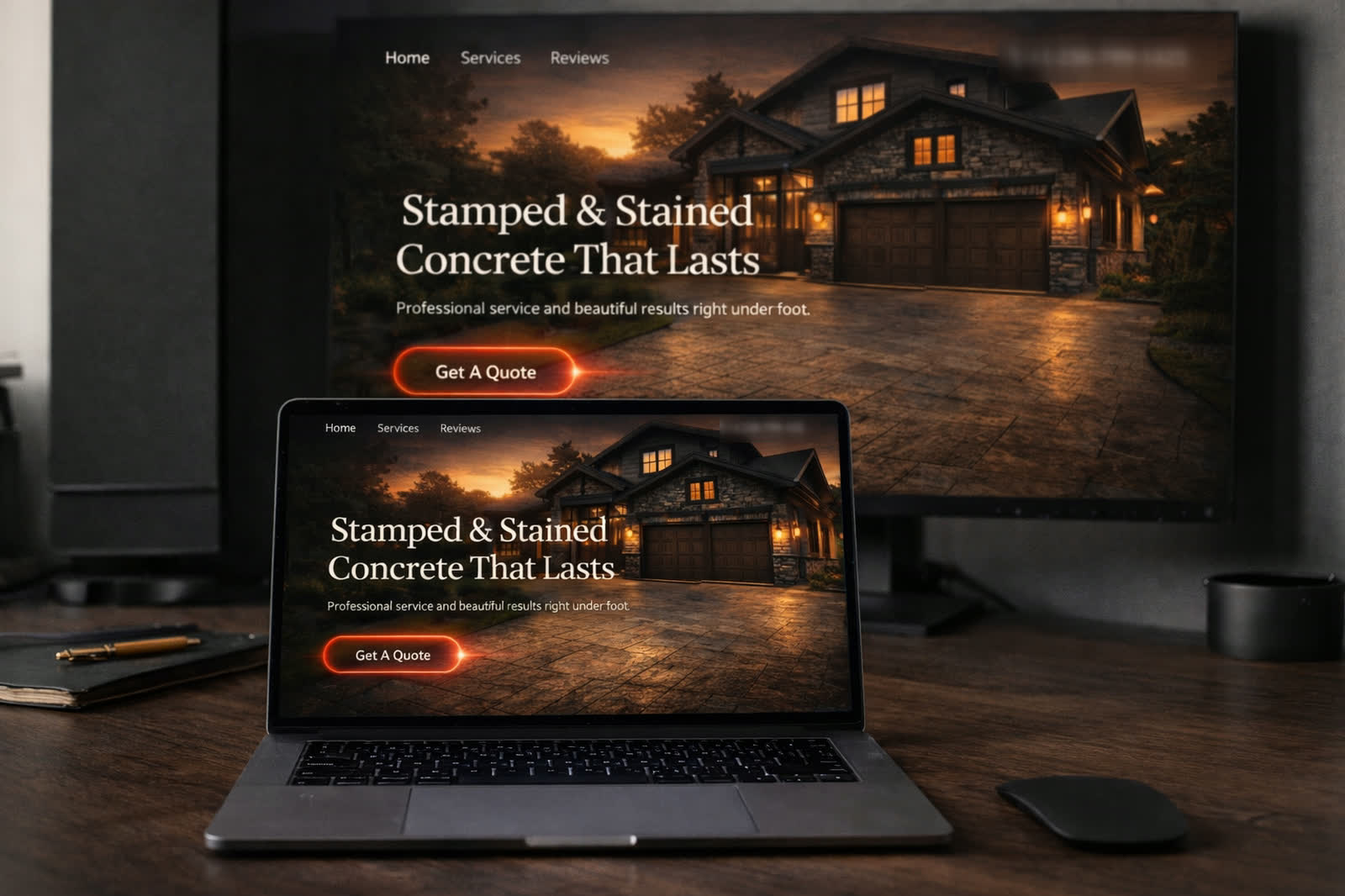
A contractor website shown on a desktop monitor and a laptop on a desk.
75%

of people judge whether a business is credible on its website alone.

87%

of local searches now happen on a phone, usually standing in a driveway.

5×

more likely to get the job if you answer first, not cheapest.

Industry figures, not our own client results. We will swap these for ours when we have them.

What you actually get

What makes it high conversion?

A website either converts or it decorates, and the difference is not the colour scheme. It is the order of the page, where the form sits, what you show and what you leave out. Getting found is the list further down. This is what has to happen once somebody actually lands.

One decision per screen

The page is built in the order a customer actually thinks in: what do you do, can I trust you, what does it cost, how do I get hold of you. Every section asks for one thing. Sites that offer five choices at once get none of them taken.

The form is above the fold

Visible the second the page loads, without scrolling, on a phone. Name, number, what they need — that is it. Every extra field costs you enquiries, and asking for an address before you have earned it costs you more than the address is worth.

A page for every service

Not a bullet on a list. Somebody with a leak wants a page about leaks — what it usually involves, roughly what it costs, how fast you can be there. A page that answers the question outsells a page that announces you also do that.

A gallery of your actual jobs

Before and after, from your phone, on real houses in streets people recognise. This is the single thing that separates you from the outfit with the stock photo of a roof in California. Nobody needs it to be a photoshoot. They need it to be yours.

An About page with a face on it

They are about to let you onto their roof and into their driveway. Who you are, how long you have been at it, who turns up on the day. It is one of the most visited pages on any trade website and most of them waste it on a paragraph about being passionate.

Reviews where the decision happens

Your best reviews sit on the pages where people are deciding, not buried on a separate page nobody visits. They update on their own as new ones come in, so the site never looks like it stopped in 2023.

Built for a thumb, not a desk

Because that is where they are. Thumb-sized buttons, a phone number that dials when tapped, and a quote form short enough to finish standing up in a driveway with one bar of signal.

Motion with a job to do

A light sweep across the button so the eye lands on it. Sections arriving as you scroll instead of sitting there flat. Used to point at the next step, never for its own sake — the moment an animation makes somebody wait, it has cost you the enquiry it was meant to win.

Nothing bolted on that slows it down

No pop-up covering the phone number, no slider nobody swipes, no chat widget nobody is manning. Most contractor sites are slow because of things that were added to help. What is left is the stuff that earns its place.

Every enquiry gets answered

Every form and every tap lands somewhere that answers. The enquiry is routed to whoever should handle it, their phone tells them it has landed, and the customer gets a reply straight away — so the website is not just collecting names for you to deal with on Sunday night.
The whole list

Everything that decides
whether you get found.

No single trick puts a contractor at the top. It is thirty small things done properly and then kept up. Here is the whole list, so you can see what is being done for you rather than take our word that something is happening.

01
The foundations

The plumbing. Nobody sees it, and nothing above it works without it.

Loads in under two seconds on mobile data
Compressed images, no bloated page builder, nothing loading off somebody else's server. A good share of visitors leave a slow site before it has finished drawing.
Built mobile-first, not shrunk down
Google judges you on the phone version, because that is the one your customers are holding.
Secure hosting, clean addresses, a real sitemap
HTTPS, sensible page URLs, and a map of the site handed over rather than left to be guessed at.
Titles and descriptions written per page
Not one line repeated twenty times. This is the sentence people read in the results before deciding whether you are worth the click.
Every image labelled and sized properly
Alt text for search engines and for the partially sighted, and no 4MB photo off a phone being loaded at thumbnail size.
02
Pages that match what people type

You cannot rank for a service you never wrote a page about.

One page per service
Repairs, full replacement, flat roofs, eavestrough — each its own page. A single Services page listing nine things ranks properly for none of them.
One page per town you actually work in
Real areas only. Invented pages for towns you have never driven to are the quickest way to get the whole site discounted.
Written the way a customer asks, not the way a trade talks
People search "roof leaking around the chimney", not "flashing remediation". The page has to use their words to answer their question.
An FAQ answering what they genuinely ask
What it costs, how long it takes, whether you are insured. These are the questions typed into a phone at eleven at night.
Your own photos, not stock
Real jobs, before and after. Stock photography is recognisable, and it quietly spends the trust the rest of the page is building.
Pages linked to each other sensibly
A repair page pointing at the replacement page keeps people moving, and tells a search engine how the site fits together.
03
The map pack

The three businesses shown above everything else. This is the prize.

Google Business Profile filled in completely
Hours, service areas, every service listed, the right categories. Most profiles are half finished, and it costs them position.
Name, address and phone identical everywhere
Website, profile, directories, Facebook. An old suite number on one listing is enough to muddy who you are.
Listed in the directories that count
The handful that actually get referenced, not four hundred spam ones that do more harm than doing nothing.
Photos added to the profile regularly
An active profile outranks a dormant one. Finished jobs posted as you go is enough to count.
Reviews arriving steadily, and answered
How many, how recent, and whether you reply all feed the local results. Thirty from this year beats ninety from 2019.
04
Showing up in AI answers

The newest one, and the one almost nobody in the trades is doing yet.

Why this matters now
More people are asking ChatGPT, Claude or Gemini "who is a good roofer near me" instead of opening Google at all. Those answers name a handful of businesses. Being one of them is worth what the map pack is worth.
Facts a machine can read without guessing
Structured data spelling out what you do, where you work, your hours and your rating — so a model reads plain facts instead of trying to interpret a photo of a van.
One consistent identity across the web
These systems assemble you out of every mention they have seen. Three spellings of your name across four listings and you turn up as three weak businesses rather than one solid one.
Plain answers to plain questions
They quote what is unambiguous. "We replace asphalt shingle roofs across Windsor and Essex County" gets repeated. "Excellence you can trust" gets skipped.
Reviews with actual words in them
Written reviews are what a model summarises when it calls a business well regarded. A bare star rating gives it nothing to repeat.
What we will not claim
Nobody can guarantee an AI mentions you. There is no position to buy and no dashboard that proves it. What we can do is make you the easiest business in your trade for one to describe — and that is the same groundwork that wins the map pack, so none of it is wasted either way.
48h
From request to live

A site nobody updates goes stale

Send changes once a month and they are live within 48 hours of the request reaching us — not in the next sprint, not whenever somebody gets round to it. Photos off last week's job. A service you have started offering. Fresh reviews on the page. A price that has moved. A town you have started covering.

Google reads a site that keeps changing as a business that is still trading. It is also the difference between a site describing what you did last year and one selling what you are doing now.

The part that pays

Being found is not
the same as being hired.

Every item on that list earns you the click. Not one of them wins the job. What wins the job is what happens in the ten minutes after somebody decides to get in touch — and that is exactly where most of this work quietly leaks away.

→

Answer first and you usually win. The contractor who replies while the homeowner is still looking gets the conversation. The other three ring back tomorrow and find it already booked.

→

Nothing is left sitting unanswered. A missed call gets a text back. A form lands in your pocket rather than a spam folder. A quote that goes quiet gets chased without you having to remember.

→

Every finished job feeds the next one. The review that lands this week is what lifts you for the search somebody runs next month. That is the loop, and it compounds while you are on the tools.

The point of all of it

They ask at 7pm.
You answer at 7pm.

The contractor who replies first usually gets the job — not the cheapest one, the fastest one. This is what your site does while you are eating dinner.

  • The form is short enough that people actually finish it
  • It lands in your pocket with their details attached
  • They get a reply in seconds, from the number they called
  • With a link to book, before they call anyone else
yourcompany.ca/quote
Request a quote
Name
Phone
What do you need?
Send request
Request sent

Want to see yours?

Twenty minutes. We will pull up your current site and be straight with you about it.

Book A Call
How it works

What working with us looks like.

01 20 mins

Demo call

We answer your questions and walk you through the features you actually care about. Yes, it is a sales call. We are not going to pretend otherwise.

02 7–10 days

We build your system

You fill out one onboarding form with your business details. We build the website and the system behind it while you stay on the tools.

03 25 mins

Launch call

We walk you through the whole thing and show you how it runs. Which, honestly, is mostly two buttons.

Ready to get started?

Live in seven to ten days. No contract, cancel whenever.

Book A Call
Schedule Your Audit

Book Your
Strategy Call

Pick a time that works. We'll review your current setup and show you what a smart intake system looks like.

  • See the website + backend automations in action
  • No pressure — clear next steps either way
  • Fast, simple booking

Request Your Free Audit

Takes 30 seconds. No spam — just a real conversation.

Prefer to talk now? Call or text (226) 348-3923